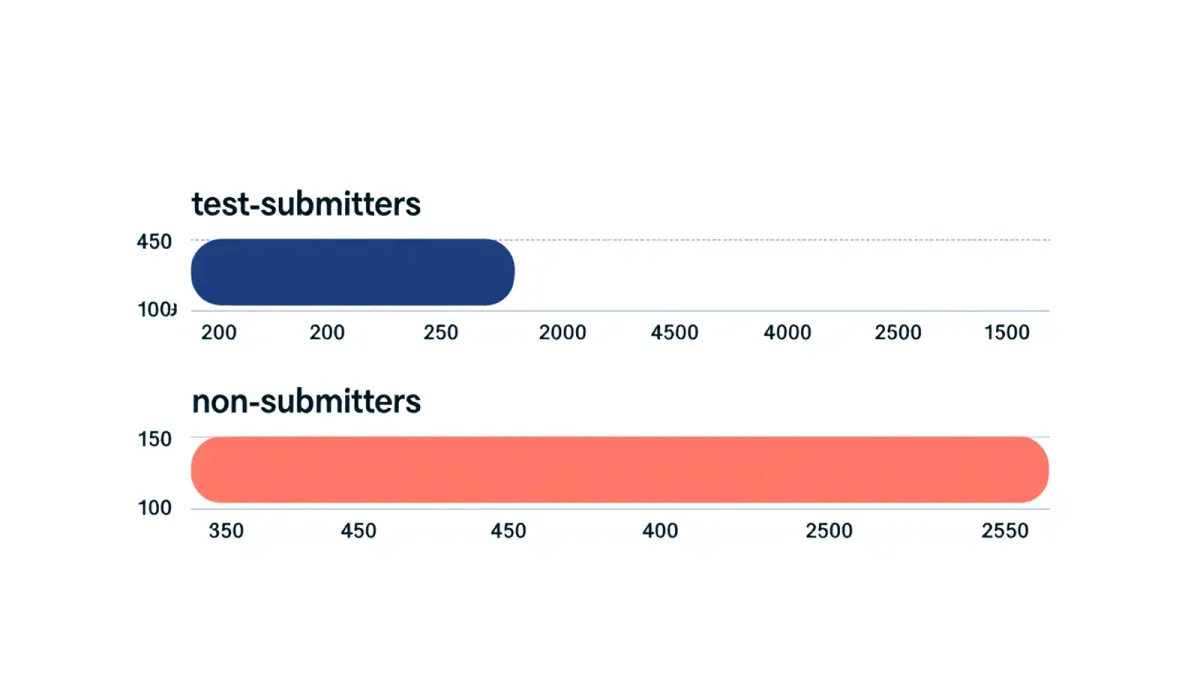
No AI writing detector on the market can reliably prove that a specific student essay was written by a chatbot, and a district that treats a detector's score as proof risks disciplining students on faulty evidence. A 2023 Stanford study published in the journal Patterns found that widely used GPT detectors misclassified a large share of essays written by non-native English speakers as AI-generated, while correctly identifying native speakers' human writing almost every time. That gap is the starting point for any purchasing decision, not a footnote to it.
This article lays out an evaluation framework, not a verdict on any single product. Vendor claims about detection accuracy are the vendor's own claims, and a district should verify them independently before writing academic-integrity policy around a tool's output.
What Does the Research Actually Show About Detector Accuracy?
Independent testing has consistently found that detection accuracy drops when text is edited, paraphrased, or produced by less common language models, and that false-positive rates rise for writers whose English patterns differ from the training data the detector was built on. The Stanford team's finding on non-native English writers has been the most cited result, but it is not an isolated one: several university writing-center audits published in 2023 and 2024 reported similar unevenness when detectors were run against archived, pre-ChatGPT student essays that no tool should have flagged at all.
None of this means detection is worthless. It means detector output functions as a signal that warrants a conversation with a student, not as a finding of fact that supports a grade change or a disciplinary record on its own.
What Should a Curriculum Office Ask a Vendor Before Signing?
Five questions separate a defensible purchase from a liability:
- What is the published false-positive rate, and on what test set? A vendor that cannot produce a methodology, sample size, and demographic breakdown of its test writers has not done the work.
- How does accuracy change with human editing or paraphrasing? Detectors that perform well on unedited machine text often fail once a student runs the same text through a paraphrasing pass.
- What does the tool do with English learners' and neurodivergent students' writing specifically? Ask for that subgroup's false-positive rate by name, not a blended average.
- Is the score presented as a probability or a verdict? A tool that outputs "98% AI-generated" invites misuse; one that outputs a calibrated, hedged probability with a stated confidence interval is easier to use responsibly.
- What data does the tool retain? Student writing uploaded to a third-party detector may be stored, used for model training, or shared, and any data-use terms need review under the district's student-data policies before rollout.
A vendor that cannot answer the first three questions with data, rather than marketing language, is not ready for a pilot.
How Should a Policy Use a Detector's Output?
The safest institutional posture treats a flagged score as the start of a conversation, never the end of one. That typically means: the score triggers a private meeting with the student, not an automatic grade penalty; the student is shown the flagged passage and asked to explain or reproduce their process, such as drafts, outline notes, or a document's edit history; and no disciplinary consequence is recorded from the detector score alone. Several university academic-integrity offices adopted versions of this posture publicly during the 2023-2024 school year, after early cases in which students were nearly disciplined on detector evidence that later proved unreliable.
Districts writing new academic-integrity language should also decide, before a single case arises, what counts as legitimate AI use. A policy that bans "AI assistance" without defining it will not survive contact with a student who used grammar-checking software, which itself increasingly runs on machine-learning models.
What Belongs in a Pilot Before a District-Wide Rollout?
A short pilot, limited to a single grade band or department, surfaces problems that a sales demo will not. Track the false-positive rate against a known set of pre-AI student writing samples already on file, and track it separately for English learners, since that is the population the published research flags as highest risk. Interview the teachers who used the tool about how often a flag led anywhere productive, versus how often it simply consumed a meeting that changed nothing.
If the pilot's false-positive rate on the district's own student population is not meaningfully better than what independent research has already documented, the tool has not earned district-wide deployment, regardless of what the sales materials promised.
Is a Detector the Right Tool for the Underlying Problem?
Many academic-integrity offices that ran a detector pilot concluded that the more durable fix was assignment design, not detection software: essay prompts that require a student's own class discussions, in-process drafts, or personal data are harder to outsource to a chatbot than a generic prompt is. A detector purchase decided in isolation from that redesign work addresses the symptom and leaves the underlying incentive in place.